Ramadan Iftar 2026
Barking Abbey School proudly hosted its third Ramadan Iftar, marking a significant milestone as the event expanded to include all year groups over two evenings. On Tuesday 10th March, students from Years 7 to 9 gathered to celebrate, followed by Years 10 to 13 on Wednesday 11th March. Across the two evenings, more than 350 staff and students attended, many dressed in elegant traditional attire that reflected the spirit and significance of the occasion.
The evening began with beautiful Qur’anic recitations from students across all year groups. Their dedication and skill were truly inspiring, whether they had memorised sections of the Qur’an or were continuing on their journey towards completion. A particularly heartwarming contribution came from Masum, a Year 12 ARP student, who spoke eloquently about the significance of Ramadan and the importance of family during this blessed month.
We were honoured to welcome esteemed guests from Al Noor Mosque, including the renowned reciter Sheikh Munir Amour. Imam Abdillah Al-Nawfil further enriched the evening with a thought-provoking talk, encouraging reflection on the importance of avoiding judgement, doing what is right and contributing positively to our community. We were also pleased to welcome a guest from Revert 2 Islam, who spoke powerfully about the importance of compassion and understanding. Together, their words served as a powerful reminder of the need to respect our parents and guardians, and to extend that same respect to our teachers and school staff.
As the call for Maghrib prayer signalled the breaking of the fast, attendees shared the traditional opening of dates and flavoured water. Sheikh Munir Amour then led the congregational prayers, followed by a delightful feast. The menu featured a delicious range of dishes, including Chicken Bhuna, Mughlai Paneer, pilaf rice, poppadoms and a variety of accompaniments. The warmth of the gathering was made even sweeter by desserts generously contributed by students and staff.
Embodying the spirit of generosity, the school also collaborated with the Global Relief Trust to raise funds for communities in need. This act of charity was a testament to the compassion and unity within our school community.
We would like to offer a heartfelt thank you to all the staff involved in this week’s two Ramadan Iftar events. The Iftar is a true community event, and it was wonderful to see so many people come together to celebrate our diverse and inclusive school community.
The Barking Abbey Ramadan Iftar was not only a celebration of Ramadan, but also a reflection of the values of unity, generosity and community spirit that define our school. We are deeply grateful to everyone who helped make this event such a memorable success. Here’s to many more gatherings that strengthen our bonds and celebrate our shared values.
What is Ramadan?
Ramadan is the ninth month of the Islamic lunar calendar and is one of the holiest months of the year for Muslims. It is a month of fasting (sawm – in Arabic) from sunrise to sunset and is one of the five pillars of Islam. The other pillars being: Declaration of faith (Shahadah – in Arabic), Five compulsory daily prayers (Salah – in Arabic), Obligatory charity (Zakat – in Arabic), and Pilgrimage to Makkah (Hajj – in Arabic). A foundational pillar of practicing Islam is fasting during the whole month of Ramadan. This devotional act is observed by over a billion Muslims worldwide today. Fasting is a major act of worship, and it is a powerful means of cultivating God-consciousness in the heart and mind.
Why is Ramadan so Important?
Allah (Arabic name for God) says in the Qur’an (translation), “Ramadan is the month in which the Qur’an was revealed, as guidance for humanity…so whoever of you witnesses the month should fast it.” [Al-Quran 2:185]
Muslims therefore observe Ramadan by ritually fasting for the entire month in gratitude to God. By restricting the body’s appetites during daylight hours, believers rejuvenate their spirituality, repair their religious conscience, and cultivate their devotion to and connection with God.
How Muslims Observe Ramadan?
Muslims observe Ramadan by abstaining from food and drink —all out of devotion to their Creator.
They are also called to practice self-restraint and respond to every situation with patience and kindness. The Prophet Muhammad (peace and blessings be upon him) stated, “Whoever does not give up lying and acting dishonestly, then [know that] God has no need for this person to give up food and drink (i.e., fasting).” [Sahih al-Bukhari #1903]
In addition to fasting, Muslims also celebrate Ramadan by reciting and studying the Quran, performing acts of service, and giving to charity. Muslims complete their Quran readings individually and in nightly congregations that take place in every mosque on the planet.
What is the Purpose of Ramadan?
Muslims fast for the entire month of Ramadan in gratitude to God for His final revelation, which God states is a “guidance to the whole of humanity”.
By restricting the body’s appetites during daylight hours, believers rejuvenate their spirituality, repair their religious conscience, and cultivate their devotion to God, thus increasing piety and God consciousness.
Ramadan is a period of practicing extra awareness about all the things that could spoil our spirituality and fuel the ego that feeds off our catering to its appetites throughout the year.
Fasting is a means of self-control to please God.
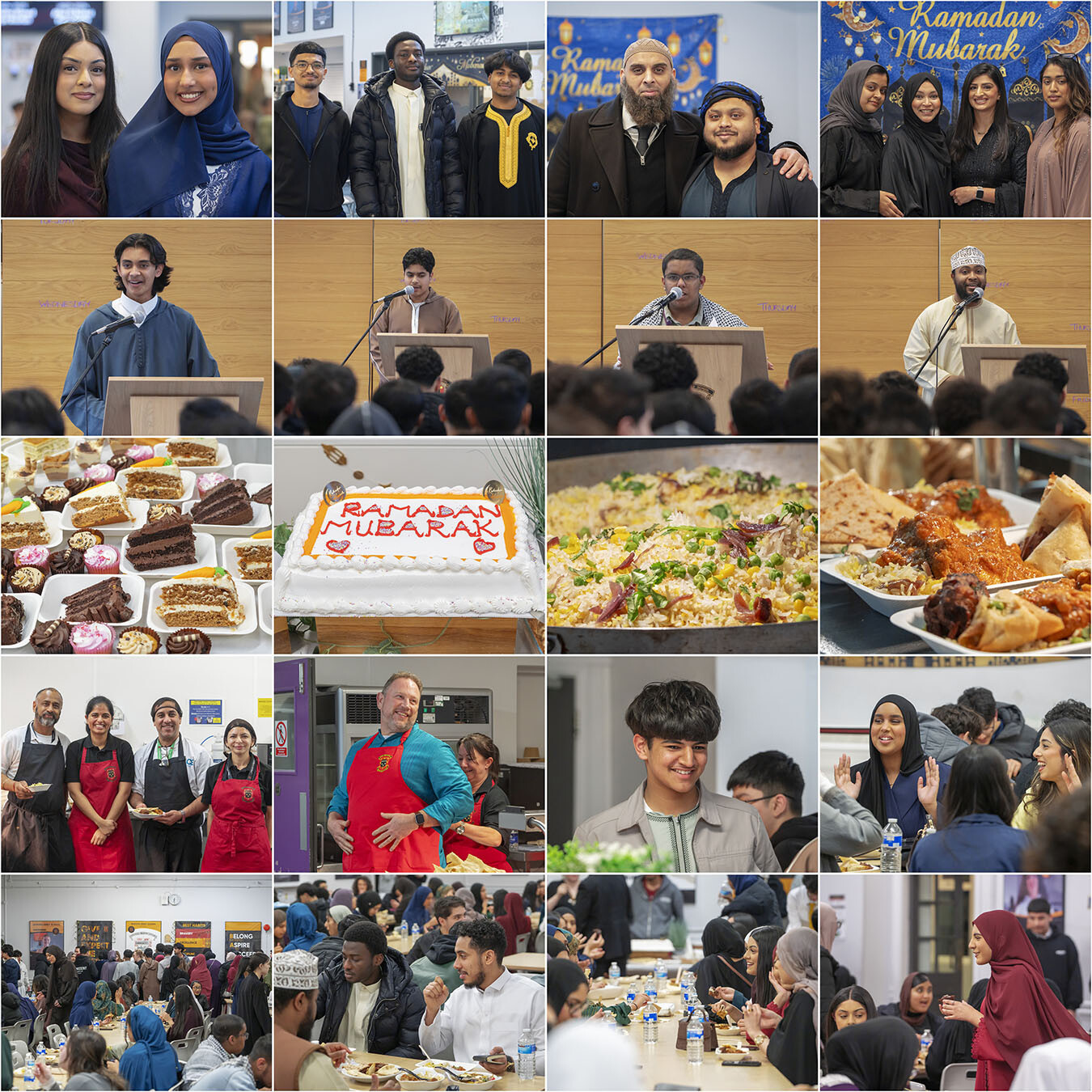
All the photos from the event can be seen here.